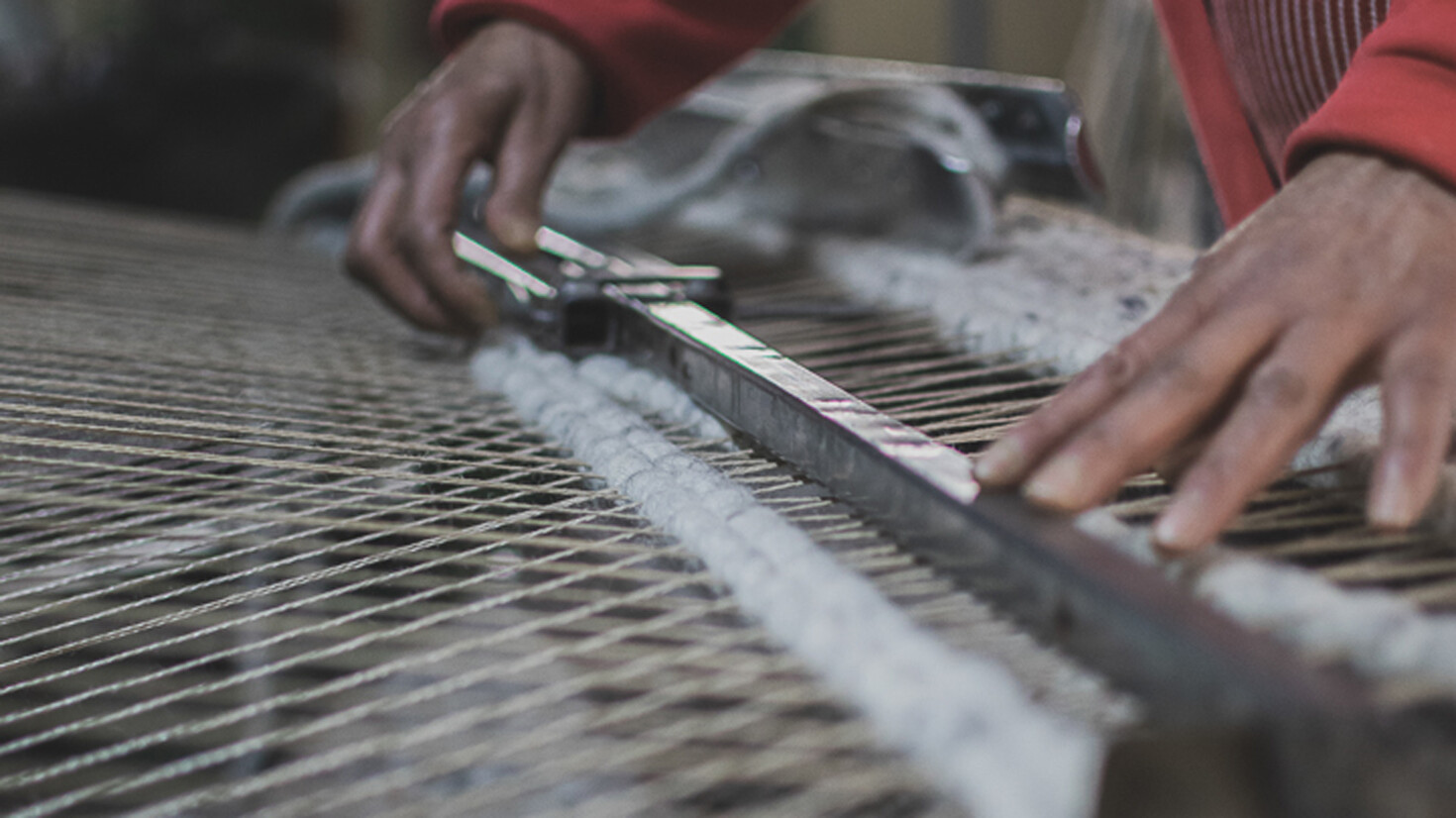
Manufactory
Ever since the beginning, Haro® Rugs has manufactured its products in a way that protects people and the environment. Haro® Rugs strictly ensures that no children are involved in the working process for any of the goods produced or ordered. Our employees working directly on-site can see this for themselves every day. The careful selection of high-quality renewable raw materials – wool, jute, cotton, sisal – is the best prerequisite for gentle processing. This begins with pure water and chemical-free soap. The necessary protection against moths is, of course, odorless and certified as harmless to health.
Dyeing at Haro® Rugs is also carried out to the highest ecological standards. Heavy metal-free, strictly controlled quality products from Switzerland protect people, air, and water. And only what is written on a Haro® Rug label is actually inside the rug. The manufacturing of a Haro® rug is simply friendly to the Earth - to people and nature.
Hand-woven rugs
Weaving is the oldest technique for manufacturing a rug. It involves interlacing two systems of yarn (the warp and the weft) at right angles. The very special feature of a hand-woven rug is that it can be used on both sides.
Haro® Rugs by Paulig sees itself as a manufactory. From the Latin manus (hand) and factura (making). From the shearing of the live sheep to the finished rug, from the dyeing and spinning of the wool to the weaving, knotting, and tufting – from start to finish, a lot of pure handcraft goes into a Haro® rug.
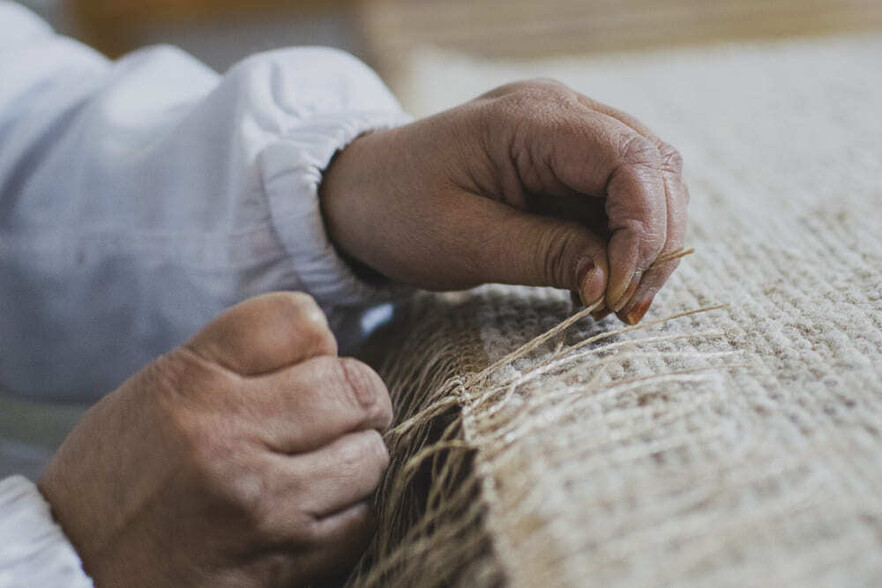
To consistently guarantee this important foundation, the entire manufacturing process from the first to the very last step is in the hands of Haro® Rugs. This closed value chain provides the assurance of achieving the best quality at the highest ecological standard.
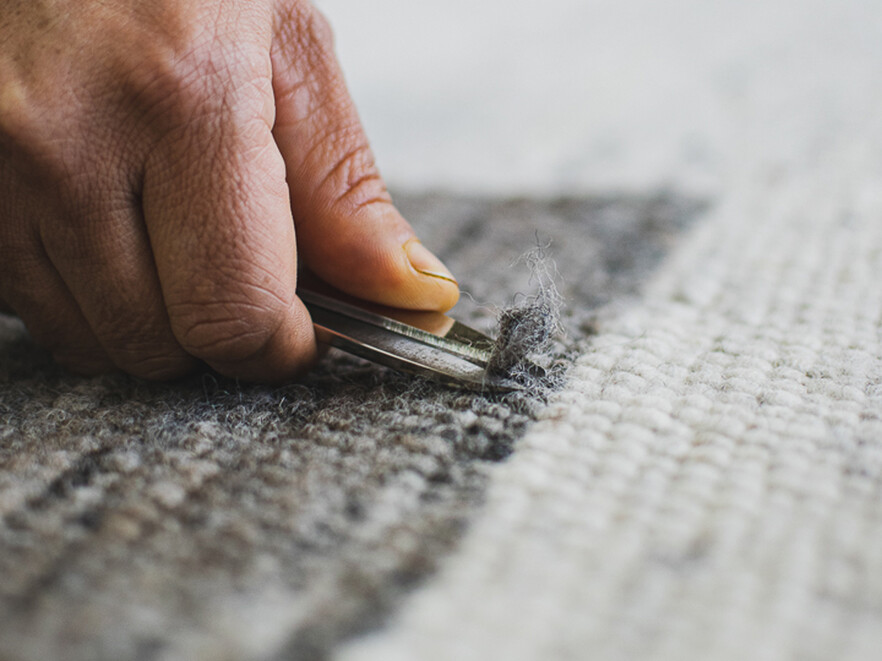
But what actually distinguishes a handmade rug from one that is largely machine-made? The human element – the radiation of harmony, liveliness, and passion. You can see it, you can feel it, and you can sense it. Handcraft simply has a soul.
Be kind to the Earth.
- Dalai Lama
Production steps

1. Washing the wool and applying moth protection

2. Dyeing the wool

3. Mixing wool according to recipes to create melanges

4. Carding the wool blend

5. Spinning the yarn

6. Felting the yarn

7. Manufacturing effect yarns

8. Weaving the rug

9. Knotting the rug off

10. Attaching fringes or borders

11. Finishing

12. Quality control

13. Shipping